
Introduction to a
SCAO: Smart Contract Assisted Organization
written and designed by Klemen Skornisek
Original post: Nov 8th 2022
Last edit: Nov 21st 2022
Foreword
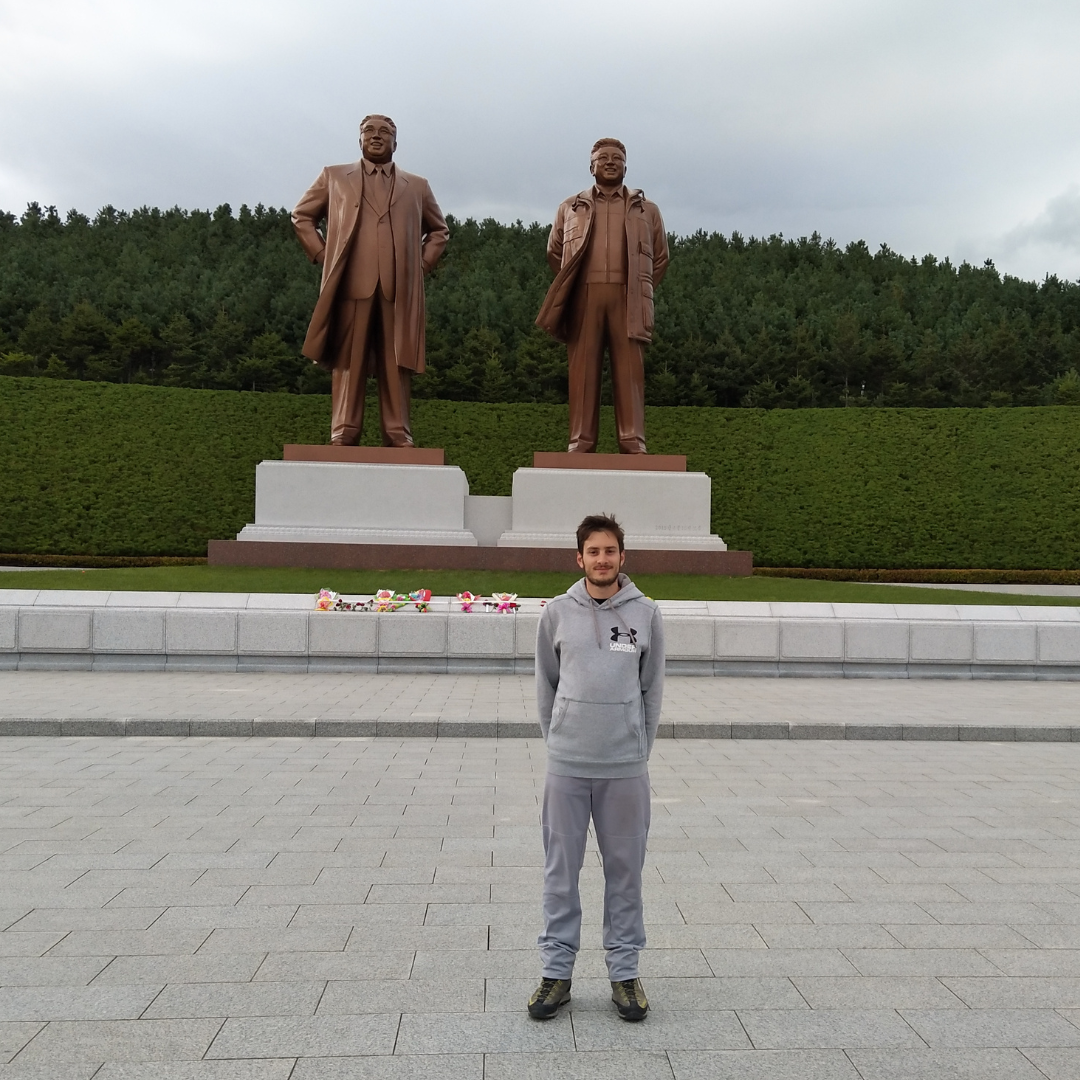
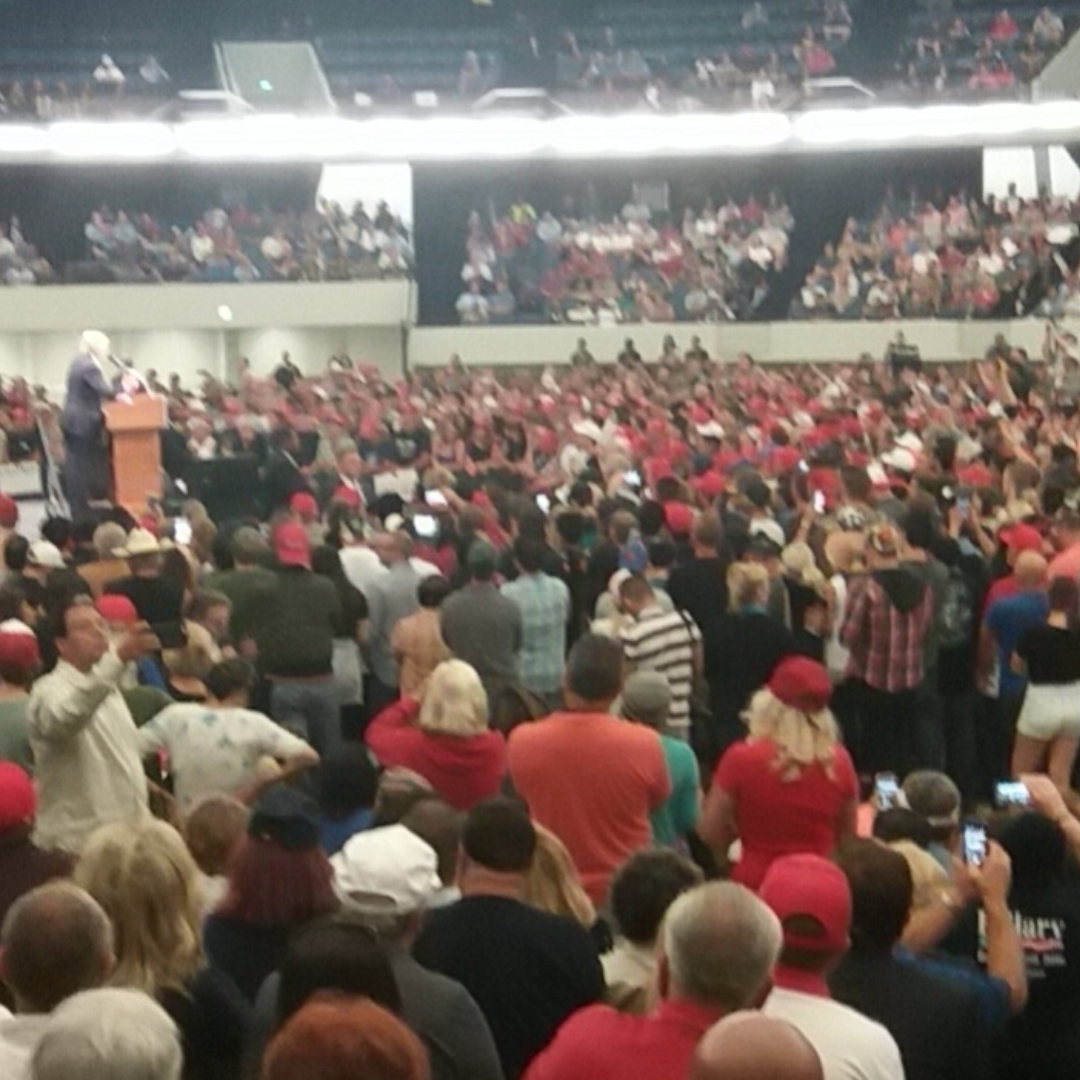
Being born in a freshly forged referendum based “direct-ish” democracy, witnessing first hand the United States’s republican representative democracy and working with the Democratic People's Republic of Korea made me develop a passion for governance. While designing Tomorrow Tree’s long term governance structure I encountered the blockchain industry’s DAO concept along the way, which made me realize we are presented with a significant, historical, golden opportunity to safely experiment with a simple big picture question:
Does democracy outperform dictatorship ?
Currently, most governance structures we encounter in our daily lives are organized as top - down dictatorships: corporations, associations, non profits, international organizations, institutions, clubs, offices, families. My theoretical blockchain based organizational structure which I explore in this public article focuses on corporate and social good organization governance alternatives, whose current dictatorial governance structures are mandated by law in most jurisdictions.
In the Blockchain industry, we currently don’t have this legal limitation as of 2022. The technology, the movement and the legal landscape present us with an unprecedented opportunity to play around with hypothetical monetary policy and democracy experiments on a peaceful, non - violent, non - threatening scale never before possible in the history of humankind.
Despite the blockchain industry’s recent significant failings, I implore you to keep an open mind and keep in mind the ways in which this technology can be used to better our world. A blockchain is only a tool; it can be used both for good and bad. Focusing on the good, I am happy to present to you an experimental alternative governance structure: the SCAO ( A Smart Contract Assisted Organization ).
Note:
This article assumes you have a certain degree of knowledge and understanding of decentralized blockchain technology. If you don’t, reach out to me here and I’ll walk you through the prerequisites (full KYC required).
Furthermore, note that development of the SCAO idea is still ongoing, and this page will receive regular updates in light of new information as it develops, especially regarding legal and regulatory aspects.
What is a SCAO ?
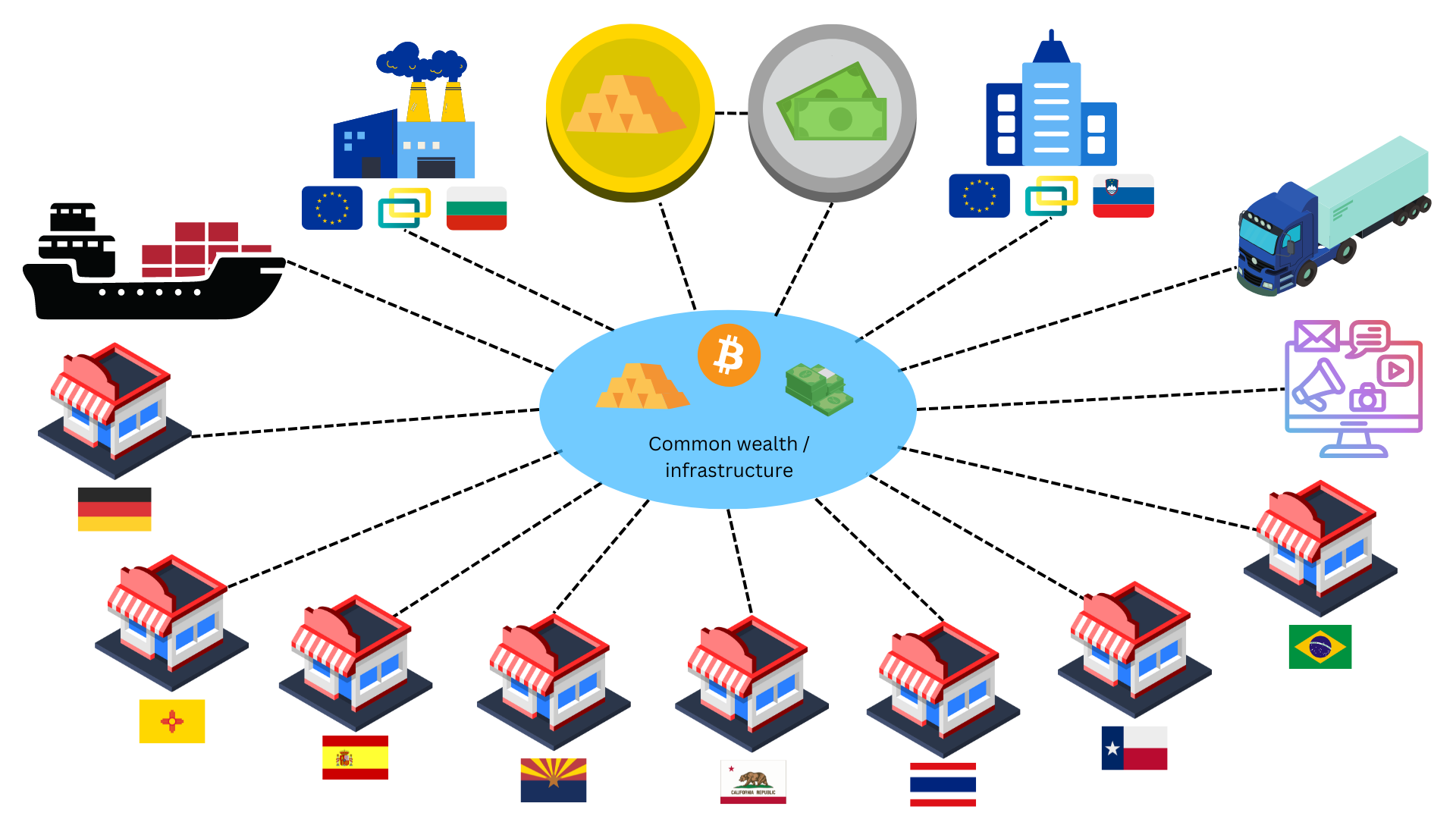
A SCAO is a set of independently run legal entities connected into a common, shared, worldwide, democratically governed network which together own and manage common, shared wealth / infrastructure and work towards a common, shared mission with the help of blockchain based smart contracts.
On a higher level imagine the SCAO performing the end actions of a large multinational organization (think Apple or Tesla), but instead of the company being structured as a top - down dictatorship where decisions come from the CEO under supervision from the board, think of it as a market reliant bottom - up collaborative, collective, democratic process. A digital nation with its own monetary policy, democratic decision making system and infrastructure.

My original country
2016 US Presidential Election
DPR (North) Korea
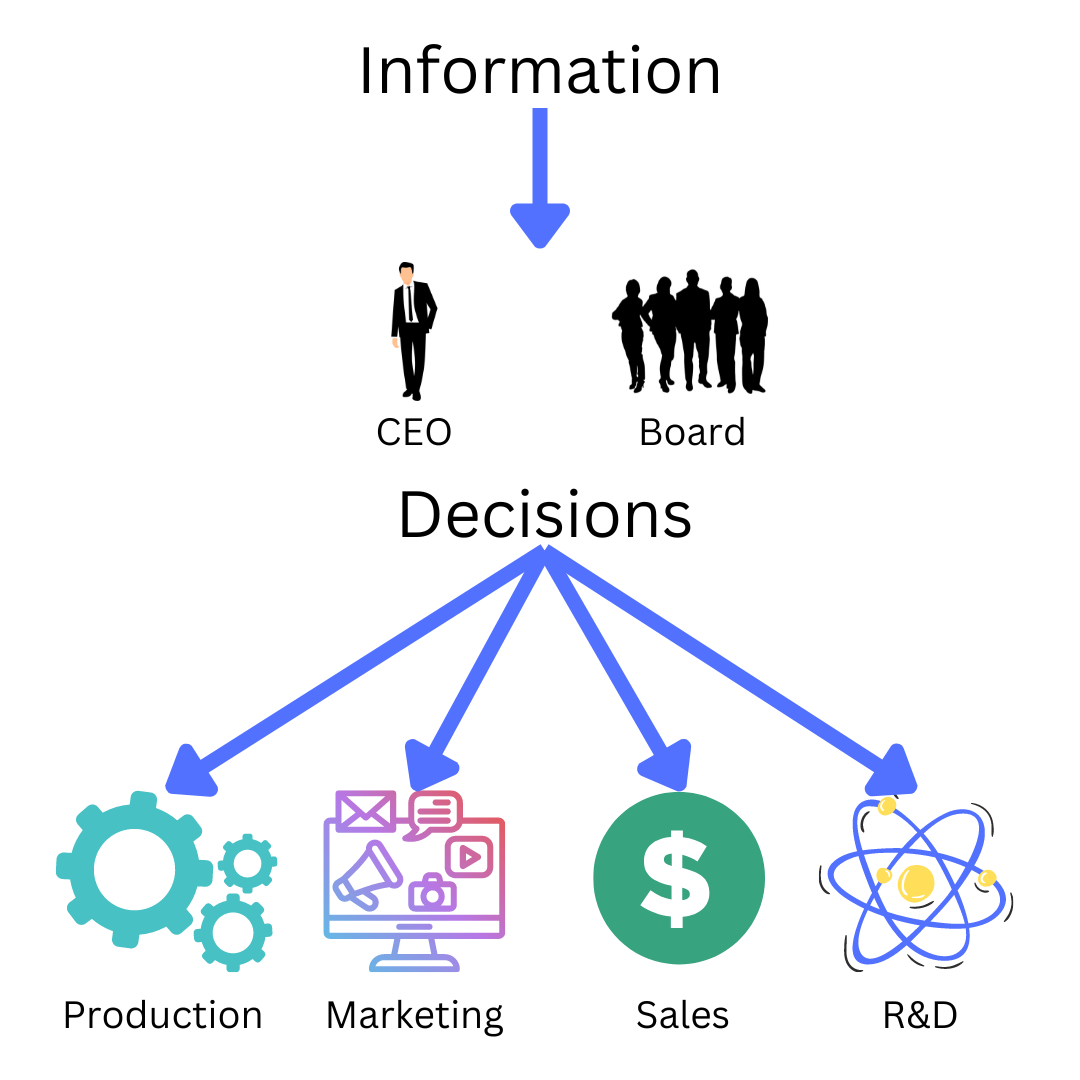
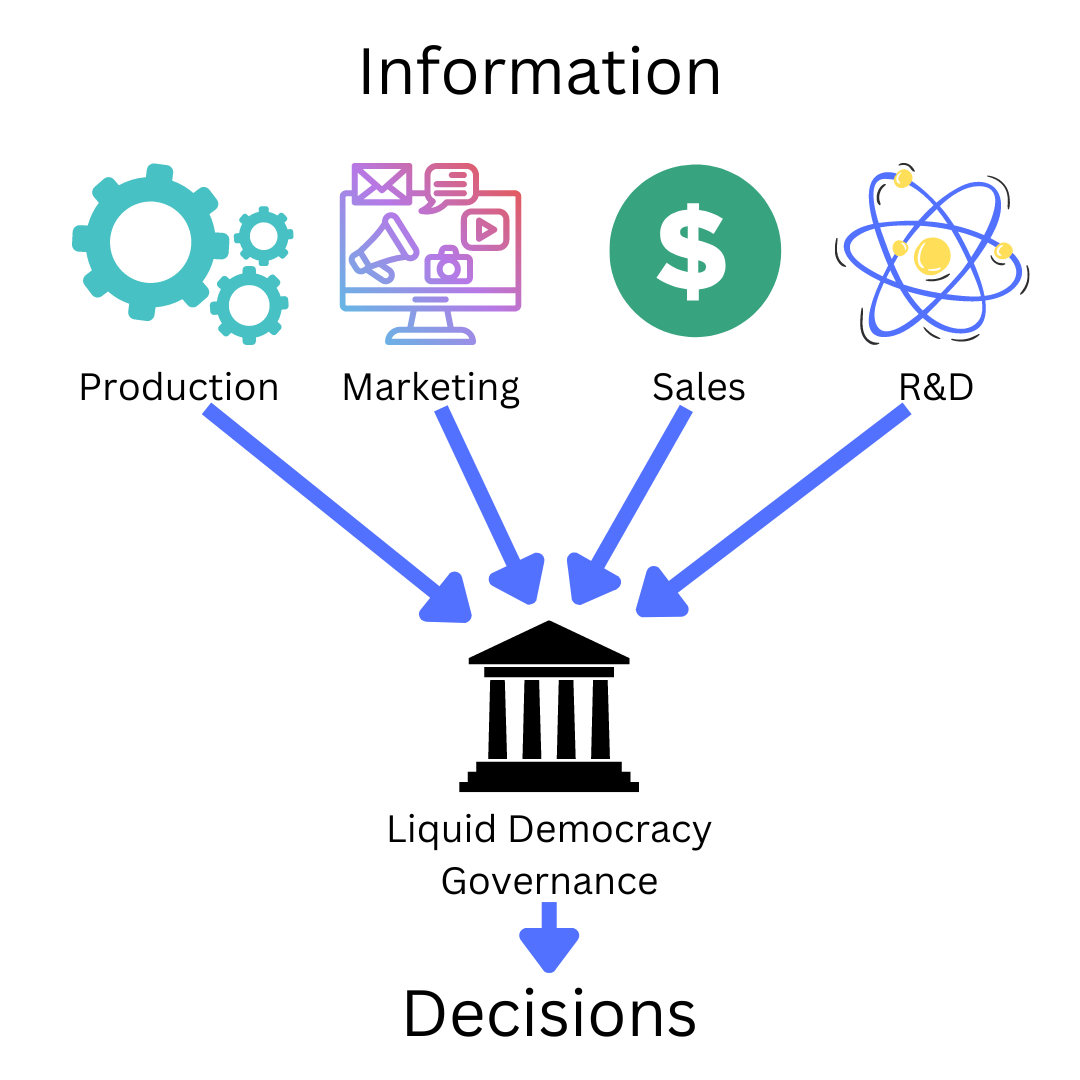
Existing corporate governance
novel SCAO governance
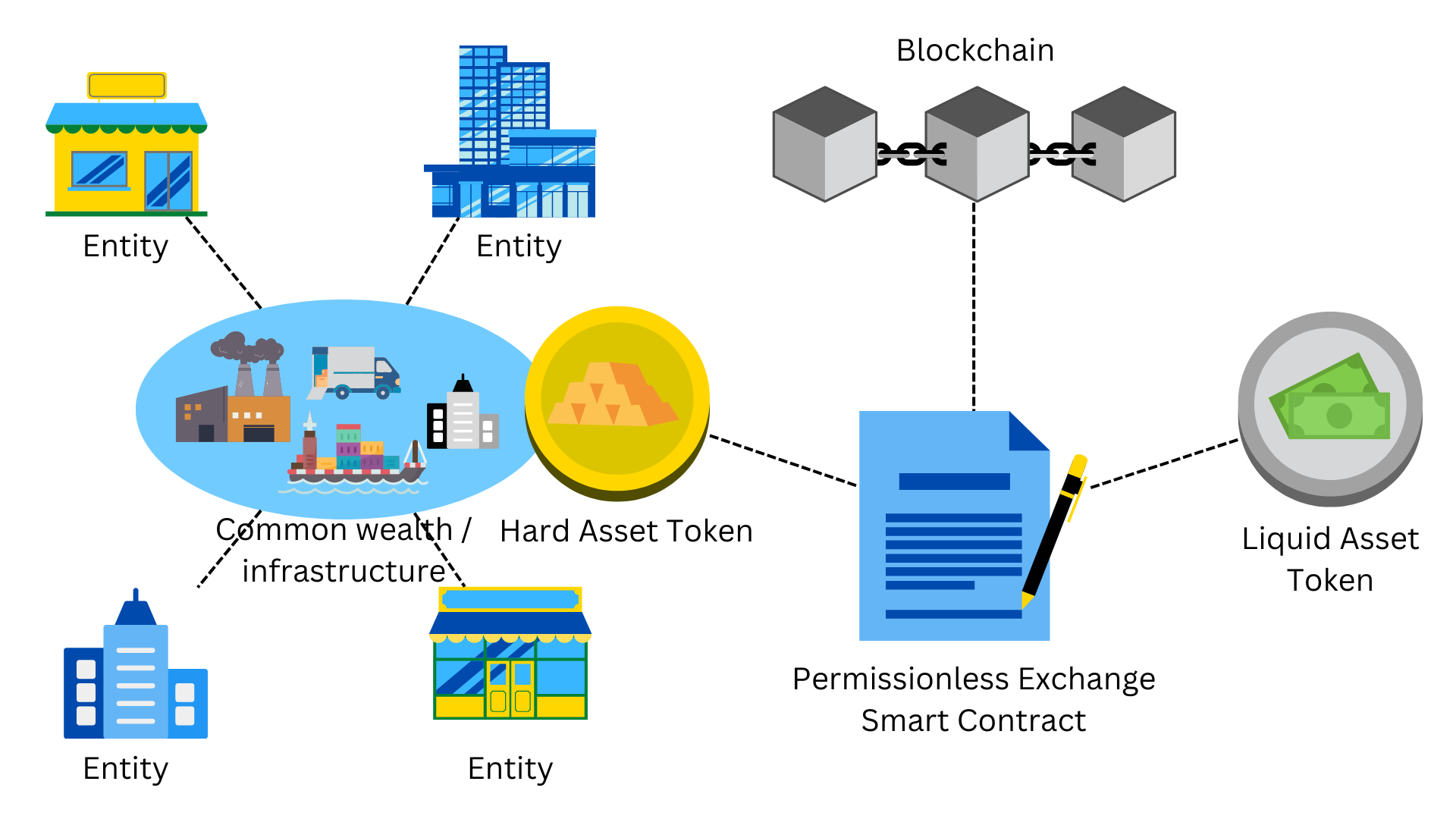
SCAO schema
An Example SCAO Network (part 1):
*Note: this example is hypothetical and does not exist in the real world

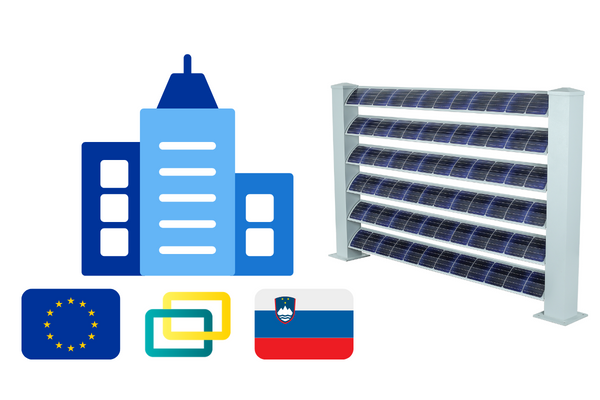
Solar Integrated is a Slovenian startup whose mission is to weave solar energy into the very fabric of our society. The company is manufacturing, marketing and installing a Solar Fence generating revenue and expenses.
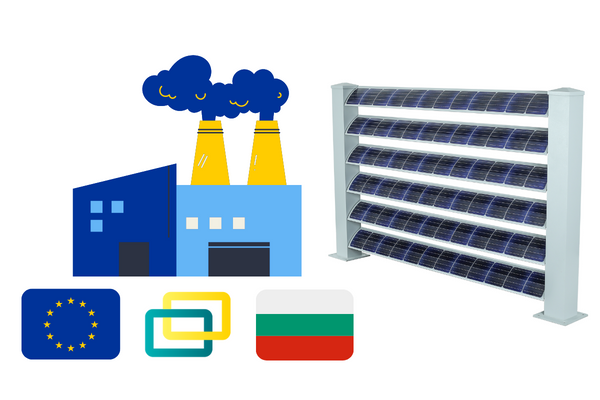

As the company grows, the original founders invest in building a Solar Fence factory in Bulgaria, opening a new entity in the country: Solar Integrated Bulgaria, which has its own unique set of income and expenses.
At a conference the founders meet an unrelated American Solar Installer (EPC) Company which wants to offer the Solar Fence to its local customers. The EPC has its own set of income and expenses flowing through a different set of founders.
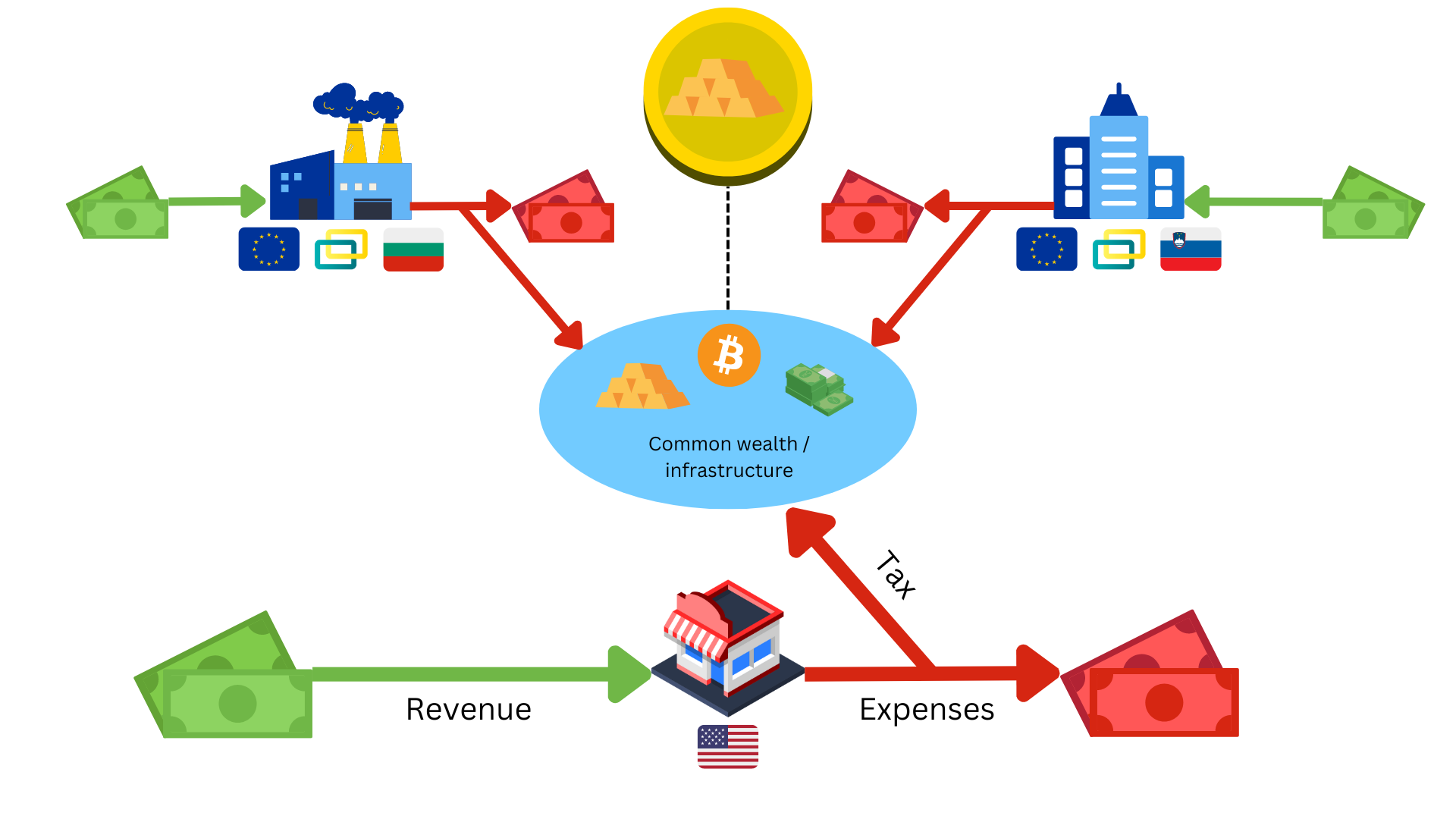
The founders share a common mission to weave solar energy into the very fabric of society with the help of blockchain technology. They know they can’t achieve their goals alone and in a visionary move collectively decide to connect into a primitive SCAO network between the three companies which aligns their incentives and connects them into a common unit without threatening their local independence.
Each company independently operates and expands while freely sharing resources, experience, intellectual property, marketing materials and more. Collaboration comes at the expense of a democratically agreed upon profit tax that funds a common treasury in return for a hard asset token. The treasury is democratically spent on common infrastructure meant to expand common wealth to which the hard asset token is pegged.
With the help of the free market, the common treasury and the liquid asset token’s stimulus word gets around and over time even more independent companies from different regions / backgrounds join; for example EPCs from other states or countries, a transportation company might see an opportunity, as might a professional marketing company for example. The theory is that the free market will produce a much more efficient and effective expansion than a centrally planned expansion would.
The companies participating in the SCAO network are all independent; tailored to local regulations, practices and realities. Expansion is quick, efficient, and everyone in the network benefits from it since incentives, infrastructure and some wealth are unified through the Hard Asset Token.
The HAT incentivizes all network participants to think and work hard on ensuring the growth of the the common treasury, to which the hard asset token is pegged to.
But more about all of this later.
How does it differ from a DAO ?
1) A SCAO is only partially autonomous,
2) There exists a balance between centralization and decentralization, where merit based hierarchies are not outright discouraged, but are accepted as a natural phenomenon,
3) Governance is more complex where multiple voting and districting schemes such as Mixed Member Proportional, Alternative Vote and Single Transferable Vote are used instead of traditional First Past The Post voting.
What are the hypothetical benefits ?
Three SCAO experiments:
( detailed explanations of each individual SCAO design coming soon )
The hypothesis is that a democratic SCAO will outperform traditional dictatorial corporations due to an increase in efficiency and productivity achieved through democratic governance, shared wealth, free flow of information, free speech, and free market principles. Furthermore, sharing wealth, infrastructure, resources and governance abilities should lead to an improvement in living standards, environmental accountability, as well as lead to a healthy decrease in suffocating wealth inequality, incentivizing the economic benefits of putting people over profit, and emphasizing having a smaller piece of a bigger pie rather than a larger piece of a smaller pie.
Currently, corporations really are structured like dictatorships making them not only inefficient, destructive to the environment and society, but also unhealthy, inhumane, abusive places to work at, presenting a vehicle accelerating centralization of wealth and power leading to numerous stability and prosperity threatening problems.
The SCAO Network System
Individual SCAOs will have slight variations in design depending on each use case, but central to the SCAO system is a liquid democracy governance system along with 2 digital assets: the Hard Asset token and the Liquid Asset Token.
Necessary Background:
(Vastly oversimplified) in today’s economic theory debate we see 2 main schools of thought: Austrian and Keynesian.
Generally speaking, the Austrian approach emphasizes stimulating supply, the actions of individuals, their psychology, economic marginalism, opportunity cost and the business cycle theory which generally lead to arguments in support of a hard asset money.
The Keynesian approach emphasizes stimulating demand, group actions, aggregations in demand, their mathematical modeling, a tiered monetary supply, coordinated monetary policy responses conducted by a trusted central authority which generally lead to arguments in support of a variable, stimulating, multi - tiered (M1 through M4) fiat money.
Even though both of these schools recognize and accept certain observations, measurements and theories from one another, they are generally at odds with each other and engage in charged, heated debate disagreeing in fundamental principles leading to the formation of two emotionally charged poles.
My personal approach to anything in life is, that success comes from balance, and truth usually lies somewhere in the middle. In designing the SCAO I took ideas from both of these two poles and combined them into one system for the following reasons:
Both economic theories are right and wrong, both have their strengths and their weaknesses:
The Austrian approach takes its confidence from real value creation, natural patterns / formations, logic and psychology. The main focus is stimulating supply and increasing productivity.
Keynesians in their arguably foolish belief that economic actors are rational reject the Austrian school on the basis their deductive reasoning is arguably useless in practice since it is impossible to empirically quantify and measure Austrians’ ideas, and that a hard asset lacking demand side stimulus leads to destructive laissez-fair boom and bust cycles that over the long term bifurcate into the haves and have nots, which ultimately leads to feudalism.
The Keynesian approach takes its confidence from the resolution to the 1930s great depression achieved through artificial stimulation of the economy. The results were so successfull stimulation continued, arguably contributing to the post second world war reconstruction and booms in economic production, population and increases in living standards. Keynesians begun dominating economics, leading to the eventual end of the Bretton Woods system which took the US dollar off of the gold standard and moved it to a backing by nothing other than mathematical economic modelling and good faith in the continued functioning of the economy.
The Keynesians’ main focus is stimulating demand. Their approach is validly criticized by the fact that often irrational human behavior is difficult to model economically. Moreover, fine tuning the economy through monetary policy adjustments will always either overshoot or undershoot their targets due to the impossibility of measuring and modelling individuals’ behaviors. Furthermore, a central entity wielding so much power will naturally lead to corruption. Today, there are fears this system is growing out of control and will eventually collapse since the money in this system is ultimately not backed by anything of real, hard value excluding the value of an arguably functioning economy / society.
The natural bi-polarization patterns between these two economic theories is nothing special. We can see countless examples in nature: capitalism vs. socialism, democrats vs. republicans, Bitcoin vs. Ethereum camps (Bitcoin has a fixed monetary policy, while the Ethereum community just organized a “tripple halving” as a result of EIP - 1559 and the Merge).



Hard Asset Token
Liquid Asset Token
Liquid Democracy Governance
In relation to the SCAO, I personally take the position that elements of both schools of thought can complement and stabilize each other while ensuring the prevention of the worst of both of these two poles from steering off too far into either direction: feudalism or economic collapse due to hyperinflation. For example: we need both Bitcoin and Ethereum, for different purposes.
In short: I’m taking the Austrian ideas of individual deductive reasoning and stimulation of supply, as well as Keynesian ideas of modelling, measurement and stimulation of demand. The key is making sure things do not go too far in either direction.
Further personal opinion: Keynes’s mistake was to point to the government as a source that needs to stimulate demand. The problem with this is, that governments are inherently vulnerable to corruption by power. Too much power in market intervention will lead to an unfavorable outcome. To the Austrians I propose that stimulating demand isn’t necessarily bad, and we should look to other authorities to stimulate demand, while we also simultaneously stimulate supply leading to a balanced hyper stimulation of both mechanisms for growth.
Hard Asset Token
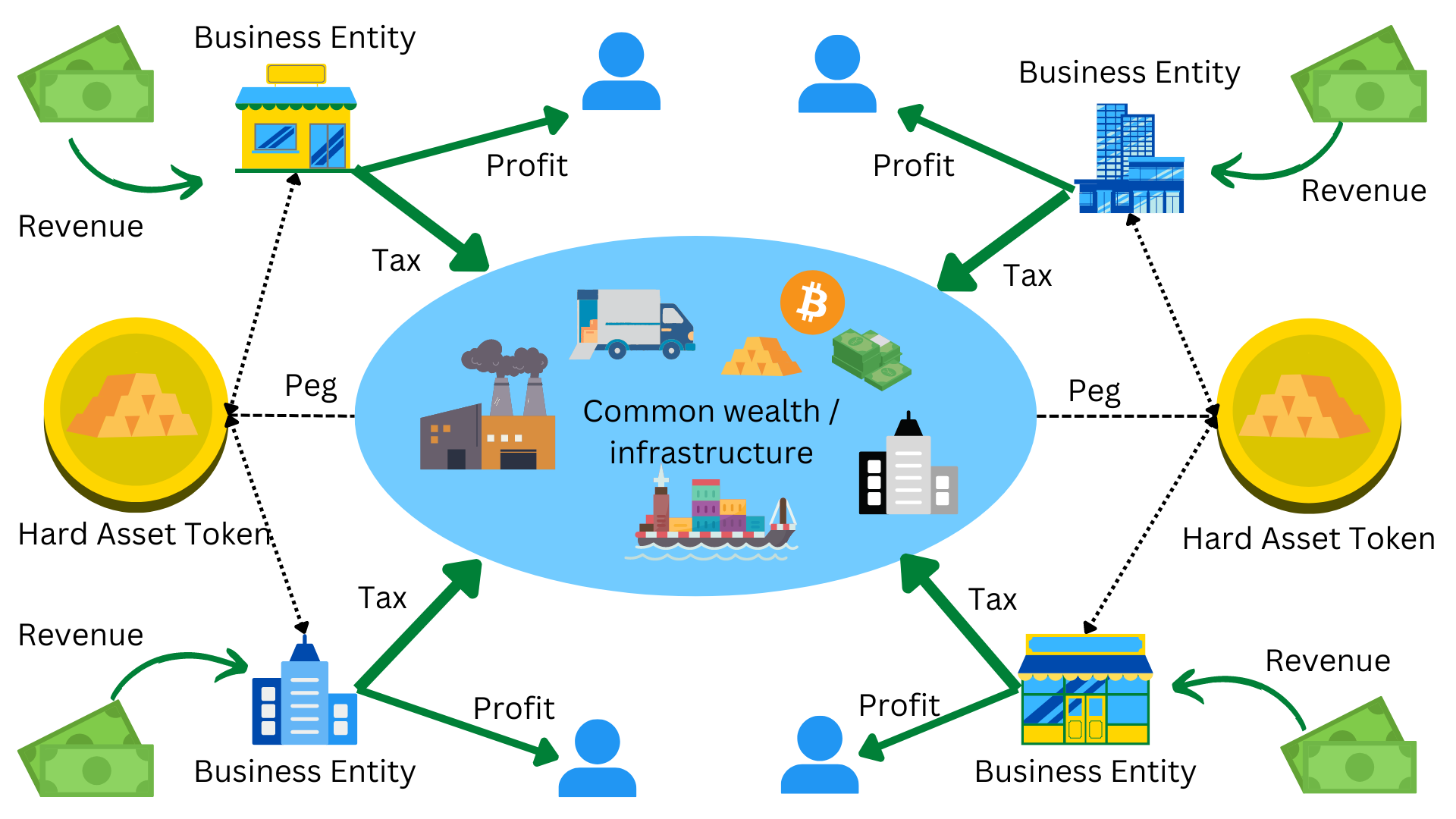
The Hard Asset Token is the Austrian inspired vehicle that is used for aligning incentives and long term SCAO stability.
The HAT acts as the internal utility currency of the SCAO used exclusively by network participants and is NOT NECESSARILY traded on the open market (will vary from individual SCAO to SCAO).
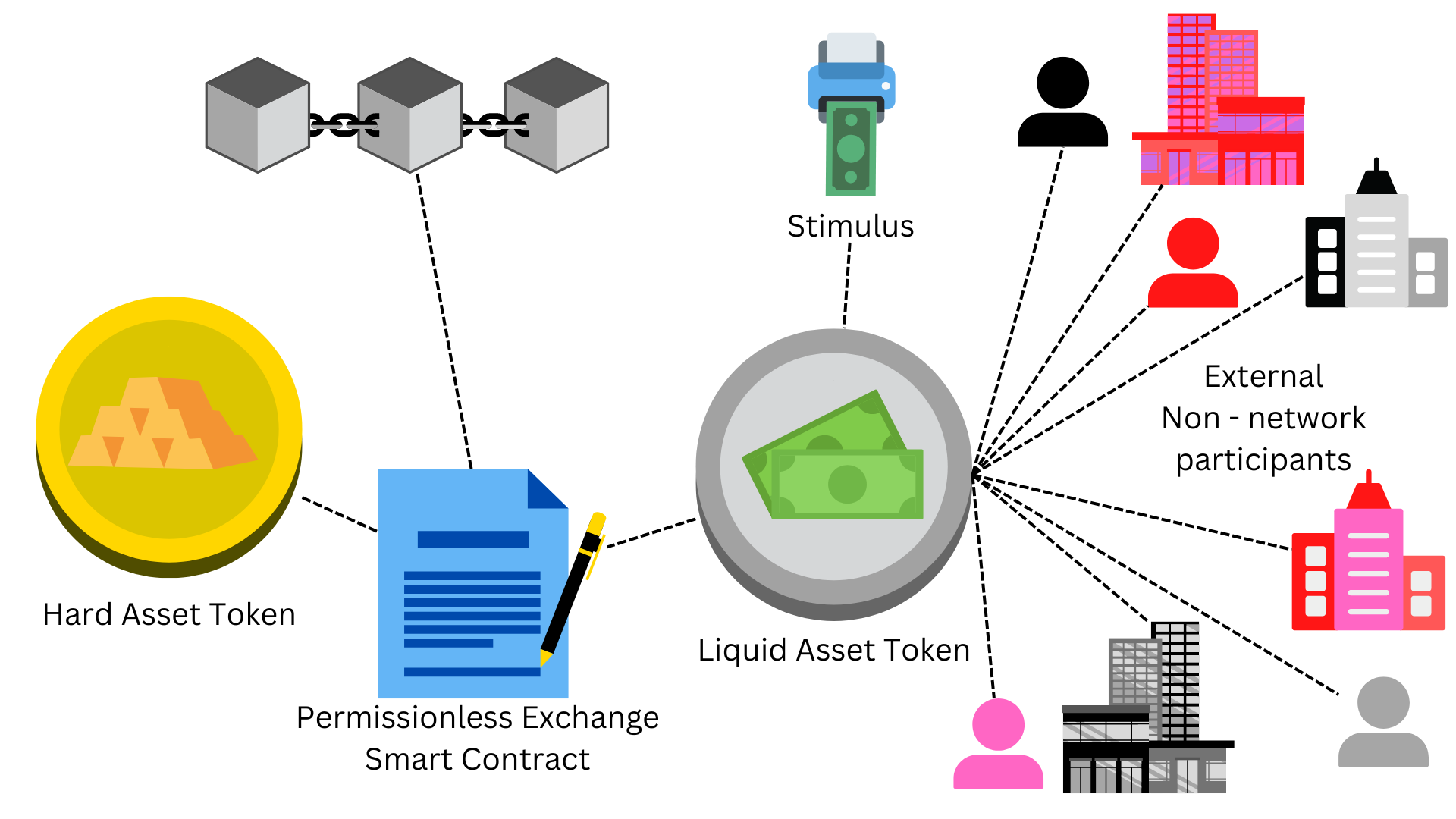
Depending on individual SCAO variables and use cases, the hard asset token is permissionlessly exchanged via a SCAO operated “liquid treasury” smart contract that network participants are authorized to use.
The Hard Asset Token has a hard cap, and the price of each token is the total value of the SCAO network treasury (the common wealth / infrastructure) divided by total token supply.
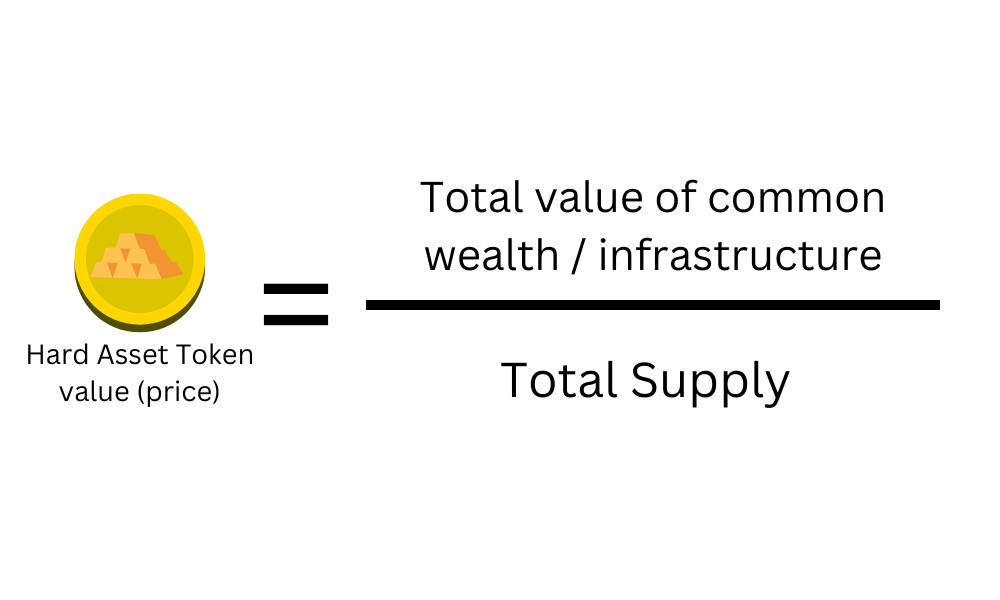
The token value can (so far in theory) be verified by Chainlink proof of reserves.
Individual, independent network participating legal entities will “mine” the token by depositing a part of their operational revenue as tax, for which these entities may receive the hard asset token in return.
The hard asset token may have various network utility use that depends on each individual SCAO use case (such as usage of common wealth factories, transportation networks, research / conferencing / vacation infrastructure, healthcare benefits etc.). This ensures the token circulation from the “central*” network to the entities and back to the “central*“ network.
*note: remember that the “central” network is decentralized through the liquid democracy governance model in which all entities participate.
Think of the relationship between the SCAO network and its participating entitites’ as the relationship between individual households and their nation - state. Households use the nation’s currency to access infrastructure like education, transportation, healthcare, security, social welfare, all of which are crowdfunded through taxes.
Individual network participating entities are encouraged to HODL the hard asset token since its value might increase in the future as the total value of the common wealth / infrastructure grows. Since network participants have a stake in the growth of the common value, they are also incentivized to participate in governance, research, expansion and general improvement of the system.
Since nothing prevents individual network participating entities from sending the tokens to another address, grassroots exchanges for fiat or other assets may emerge. Whether this should be limited or allowed by code will depend on each individual SCAO depending on custom connections to the Liquid Asset Token.
Liquid Asset Token
The Liquid asset token is the keynesian inspired vehicle that is used for stimulus and system development.
The general idea behind the LAT is to raise funds externally and enable participation with non network participants in return for a trade / investment / yield or return (pending further mathematical, regulatory and legal research).
As the hard asset token is stimulating the supply side internally, the liquid asset token’s role is to stimulate demand externally.
The token has an uncapped dynamic supply where the inflation or deflation rate depends on whether the SCAO network needs to raise funds externally by issuing tokens, or reward non - network participants for prior funding rounds by taking tokens out of the supply.
The mechanism through which this is achieved will vary between SCAO to SCAO. Examples include a separate - external voting system controlling the token supply directly or through a SCAO Network owned and controlled permissionless exchange “liquid treasury” Smart Contract that purchases and exchanges liquid asset tokens.
While the Hard Asset Token acts as a sort of risk off bond and an internal stake in the system for network participants, the idea behind the liquid asset token’s role is more akin to a risk on stock market: The LAT is available to openly trade outside of the network by non - network participants, who are able to get investment or yield exposure from the network, while not participating with the network. The details of how that is achieved will vary from SCAO to SCAO ( i.e.: will there be a dividend ? Will the liquid asset token provide a certain degree of voting (governance) rights ? ).
Liquid Democracy Governance
Introduction
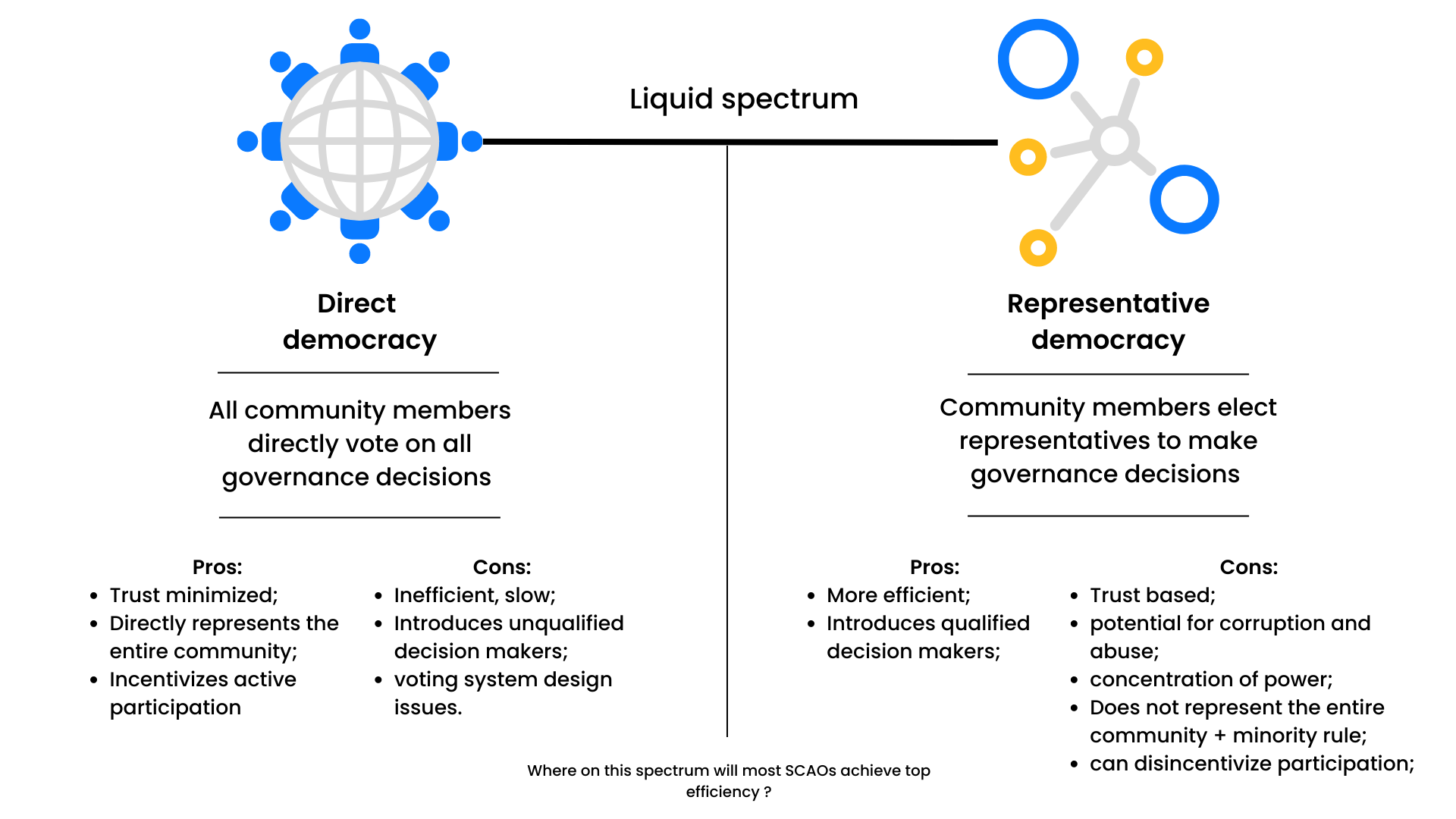
While specific governance designs will vary between each individual SCAO, the working hypothesis is that a majority of them will achieve peak efficiency somewhere along the liquid democracy spectrum. A liquid democracy system combines elements of both direct and representative democracies, which if designed right ensures the political process is open to everyone, but also provides certain protections from voters who lack the sufficient knowledge and expertise to make certain key decisions.
Governance is not an easy topic. Much debate, real world experimentation and constant scrutiny is necessary.
The governance section will be updated and better structured over time, but for now I suggest you read the documentation that was created as a result of the 2022 Polygon x Encode hackathon:
During the hackathon we looked at Porto Alegre’s Participatory Budget Process and learned that a complex adjacent infrastructure is crucial to the proper functioning of a participatory democracy.
An uniformed democracy is a dangerous democracy. Voter participation education, infrastructure and incentive scheme are the necessary requirements to achieving outperformance.
A Universal Basic Income ( UBI ) paid in return for democratic participation may be worthwhile looking into (see my rudimentary UBI thoughts here).
Other prerequisite resources:
To best understand what the governance requirements of a SCAO are, let’s look at:
An Example SCAO Network (part 2):
Alone, each of these companies cannot afford to erect common infrastructure such as for example: a Solar Fence factory in the United States. The erection of an American factory would potentially make the whole network more profitable by cutting transcontinental Solar Fence transportation costs for EPCs. Even though this would cut transportation company’s revenues (and they might in fact campaign against this decision), the negative effects would be lessened, because the transportation company’s hard asset token value would grow as a result from the better efficiency decision.
SCAOs thus lessen the negative effects of zero - sum decisions for network participants and incentivize always finding the best option.
Even though each individual SCAO will have different custom governance structures, lets look at this simple hypothetical Solar Integrated SCAO governance example case and its process:
A few further observations:
Some SCAOs may need to adopt a “constitution” of sorts defining exactly what thresholds must be set before a proposal or vote is cast, and perhaps compartmentalize certain governance processes similarly to how a case moves through a judicial system in nation states based on jurisdiction or importance.
Notice that the original Slovenian startup company does not get violently muscled out of the SCAO, and in case it happens it has its hard asset tokens as a sort of fail-safe. The need for inefficient market protection / tariffs, purging or violent takeovers is lessened and the economic laws of specialization and free market forces prevail; everyone is contributing to the same cause and efficiency is in everyone’s interest.
Problems typical to democracies such as stalemate, censorship etc. may never be eliminated fully, but at least it’s a step forward when comparing to a traditional dictatorial corporation that engages in central planning, central execution, where speaking out may cost someone their job, or in cases where it’s more economically logical for the employee to keep the idea for themselves and break away as a rival company etc.
Over time the network keeps expanding in a mathematically chaotic way. Internal infrastructure is established, which eventually goes beyond the original company’s expertise or predictions hopefully outperforming any central planning ( think Zuckerberg’s metaverse decision ). It is reasonable to envision the SCAO would even be able to attract and support scientific researchers independently innovating new technologies supported by the SCAOs common infrastructure.
Since everyone is independent and safer in a democratic environment in which they have a real stake in, everyone is incentivized to not only operate at max productivity, but also to innovate on how to maximize network value, profit and minimize expenses.
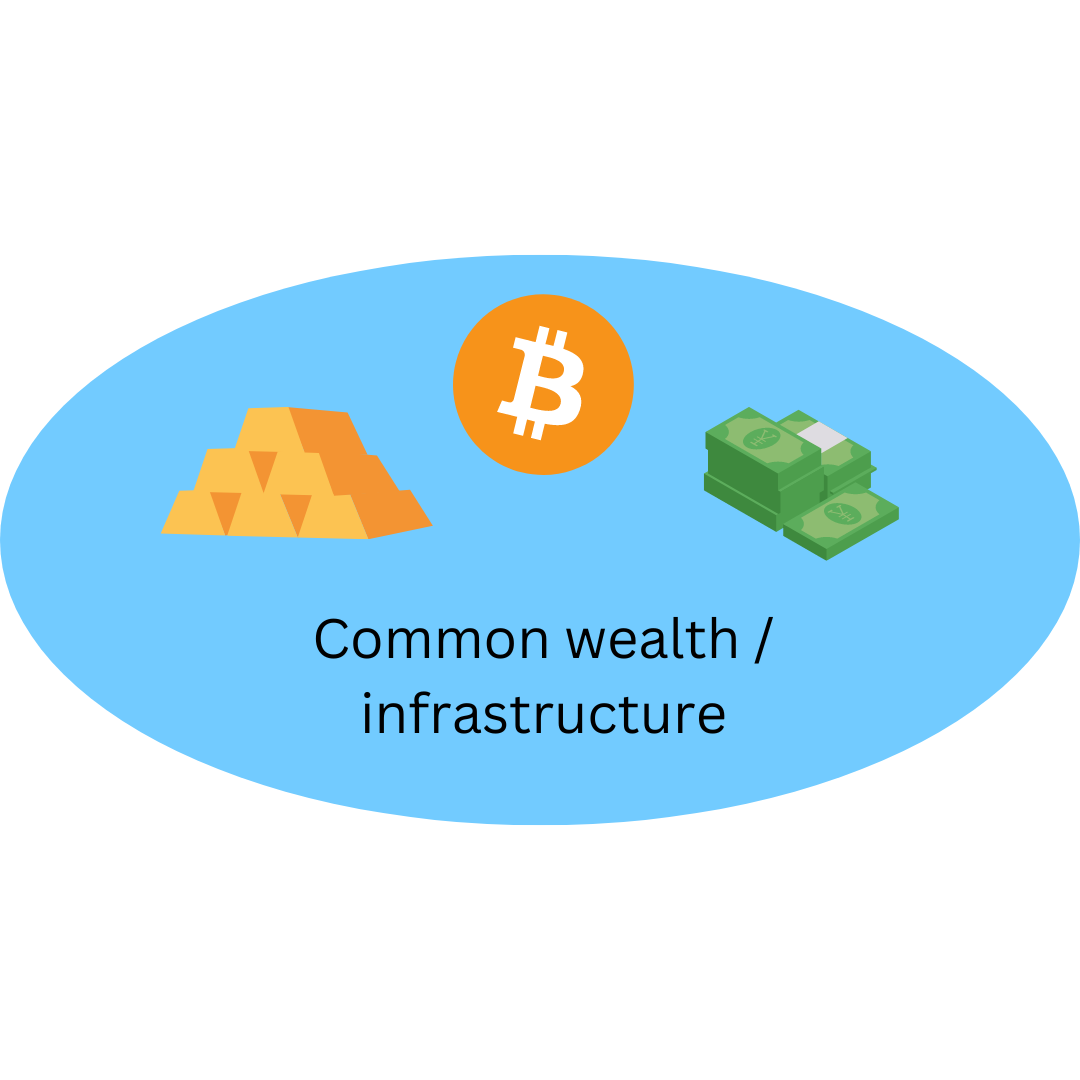


Every custom time period a Porto Alegre inspired communal wealth / infrastructure treasury budget and executive plans are proposed, discussed voted on and set by the entire SCAO network in an efficient custom process ensuring adequate participation rates.
An American entity has the idea that building a US Solar Fence factory would make the SCAO more profitable, consequentially rising the HAT price. The entity conducts market research, proposes the plan to the communal governance forum and campaigns for the realization of their plan.
This proposal will lessen the transportation company’s revenue, and they may attempt to prevent the election of the proposal by either arguing against it, or even spreading disinformation - which is why a thorough democracy voting education & infrastructure are crucial to ensure the best outcome.
Hopefully the opposing campaigns create a thorough debate from which the best choice emerges, and is set in the first part of the budgeting process setting the program agenda for the next time period.
The second part of the budgeting process encompasses the execution of the budget accepted in the first part. The execution process may differ from case to case, but for this case trusted qualified representatives may be elected into an executive factory construction committee demonstrating the liquidity of this democracy.

All ideas and data that weren’t elected remain open for further development, and are kept as historical reference points for potential future re - evaluation.

Final Remarks
Thank you for your attention 💚
Even though I have been designing a novel governance system for Tomorrow Tree Institute since 2019 it’s still at a very early stage with little real world experimentation having been done at this point due to a lack of resources.
If this topic interests you I suggest checking back for updates regularly. When certain counterarguments surface I will list them here; for example: even though the larger SCAO is governed democratically, individual entities connected into the SCAO retain their law mandated traditional dictatorial structures. My current approach to this is to think of the SCAO as a nation state and individual entities as the nation state’s individual households. Many households (say patriarchal or matriarchal families) are often structured as a “dictatorship” (where parents dictate the actions of their children), yet the nation state itself is considered democratic regardless. It is yet to be seen whether regulators would consider this properly decentralized or whether securities laws would apply… ?
Perhaps more counterarguments or criticism will surface ? Will the SCAO actually outperform a traditional multinational & multi - sectoral conglomerate ? We’ll need to test it out.
Lastly, I’d really appreciate feedback, comments, observations etc. if you can ( thank you ❤ ):